AI is Forcing a Shift from Certification to Mastery
Written by: Thomas F. Dungan III, CEO, Management Concepts

As AI transforms federal work, simulation-based assessment becomes essential for evaluating mission-ready performance.
Historically, certification exams primarily assessed knowledge acquisition. Professionals spent considerable effort memorizing regulations, procedures, frameworks, formulas, and technical details. Today, AI systems can retrieve information, summarize regulations, generate plans, draft analyses, and answer technical questions in seconds.
The critical question is no longer, “Can you remember the answer?” It is, “Can you effectively use AI and determine whether its answer is correct?”
AI exposes the difference between possessing information and possessing expertise. It can generate recommendations, but it cannot reliably determine whether those recommendations align with organizational context, mission objectives, legal constraints, ethical considerations, or operational realities. That responsibility remains with the human professional.
The future belongs not to individuals who can reproduce information from memory, but to those who can evaluate information critically. As AI makes information universally accessible, organizations must shift from measuring what professionals know to assessing how effectively they apply judgment, context, and expertise in realistic situations.
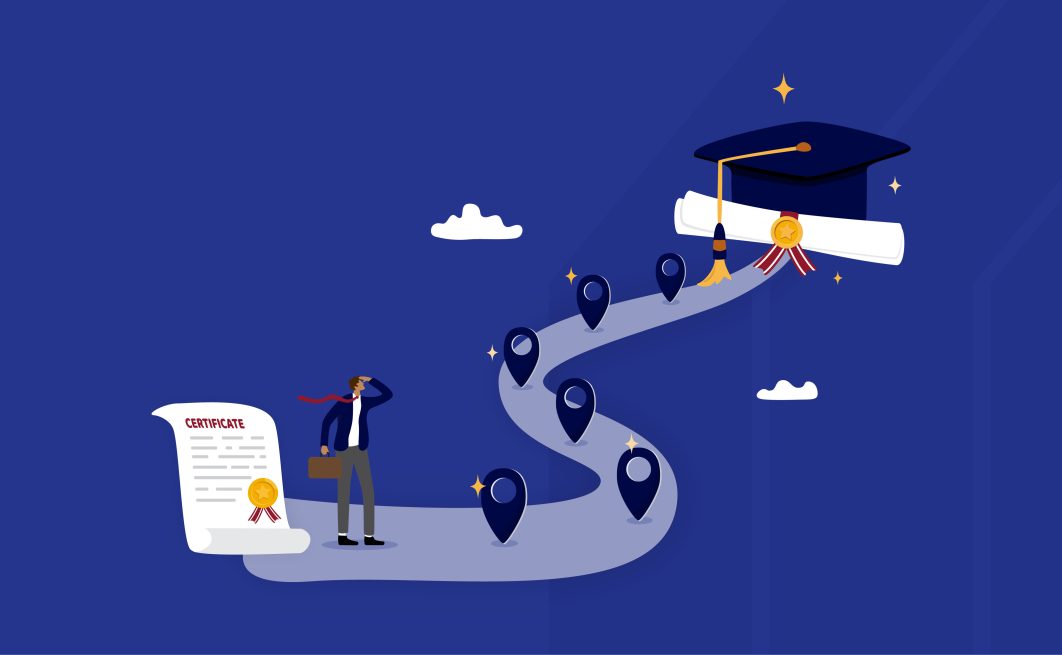
Certification and mastery are not the same thing. Certification typically demonstrates that an individual has completed prescribed learning activities and passed a defined assessment. Mastery demonstrates the ability to apply knowledge effectively in realistic situations.
As AI becomes more capable, value will increasingly accrue to professionals who demonstrate judgment, contextual understanding, critical thinking, decision-making, risk assessment, ethical reasoning, and systems thinking. These capabilities are difficult to measure through traditional knowledge-based assessments.
Organizations must move beyond testing content knowledge alone and begin assessing reasoning, judgment, and decision-making in realistic operational environments. Simulation-based assessments provide one of the most effective ways to measure those capabilities.
A traditional exam might ask a contracting professional to identify the correct procurement regulation from four options. A mastery assessment would present a realistic acquisition scenario, provide incomplete information and conflicting stakeholder interests, perhaps even include an AI-generated recommendation, and require the professional to identify risks, challenge assumptions, and make a defensible decision. That type of assessment more accurately reflects the environment in which professionals actually operate.
Organizations will continue to need certifications, standards, and structured development pathways. But the objective must shift from documenting participation to demonstrating mastery. In an era where information is abundant and instantly accessible, the true measure of professional capability is the ability to understand context, challenge flawed recommendations, assess risk, and make sound decisions under uncertainty.
Organizations need to focus not only on what professionals know, but also on what they can do. Simulation-based assessments provide one way to evaluate the ultimate objective of every workforce development program: mastery.
About the Author
For more than 26 years, Thomas F. Dungan III has guided Management Concepts through major shifts in the training industry, driving sustained growth and expanding the company’s impact on clients. Today, Management Concepts is widely recognized as a leading provider of training and human capital services for the federal workforce. Connect with him on LinkedIn here.
Sign Up For Our Blog